The man stood on the podium
Whence all but he had fled
A poet in the room cried out,
‘You’re white! You’re old! Drop dead!’
the (moderately) modest records of a (moderately) modest man

Here's a delectable novel for lovers of London, particularly those mysterious mansion blocks just west of the Marylebone High Street. Linda Grant's The Clothes on Their Backs teems with the spirit of place - and time too, the glorious seventies and the rich variety of costumes which went with them. The story concerns the gradual self discovery, through the vicissitudes of life, of the only child of elderly Hungarian refugees. Through her eyes we enter the exotic private world of a notorious slum landlord - her long lost uncle. And learn that European affluence also often conceals a bleak and tortured history. Surprise surprise, things are seldom what they seem. Love and splendor are not the sole province of the beautiful people. In short, then, another strong contender for the Man Booker prize - what a marvellous long list we are enjoying this time round.
The first half of this 2008 Booker long list contender is engrossing, moving and strong, with a beguiling richness of story-telling and achingly lovely prose. Then Michelle de Kretser's The Lost Dog seems to get rather lost in the Aussie scrub itself. The tropes, the scenes even the authorial voice become repetitive: they tell us nothing new. The reader starts to skip impatiently forward. Interesting characters are introduced then fade puzzlingly into the background. Stasis threatens. From the simple yet crucial perspective of plot, too much remains unresolved, the mother and her failing body, the art gallery owner and his sexual ambiguity, the son and his disputed parenthood, and most of all, the missing millionaire husband, who surely is the real 'lost dog' of the title. Will he too come crawling back bruised and starved, but still wagging his tail? (...or, perhaps, wearing that little black dress?)

Well well well, what a surprise, a veritable bobby-dazzler for the first station of the cross in this year's Bookerathon - Joseph O'Neill's Netherland. Just my favorite sort of novel is all, a sweet murder mystery love story covering off New York, London, big business, cricket, cooking, cute lawyers, 9/11, Eros, Google Earth, the Chelsea hotel, the odd angel, and all of it neatly packaged in a dreamy, stylish first person narrative with plenty of purple patches. So good it's tempting to give O'Neill my personal Booker here and now and skip the rest, but for one slight problem - we never get to learn whodunnit. That may be just one genre transgression too many. Or have I missed a crucial subtext?
This Jones boy has had more than a few books published in New Zealand on a disconcerting variety of themes but according to the flyleaf this seems to be the first to crack the UK publishing circuit. And - ka mate! ka mate! ka ora! ka ora! - straight to the Booker Long List!
Here’s a tortuous, tortured cry of the heart, an Irish epithalamium for a lost brother. Easy to put down, hard to read. Brutal, bawdy, bathetic and all too heart-felt.
As you tackle the opening paragraph you sigh a little, because this novella is written entirely in the first and second person, rehearsing in real time just one half a conversation taking place over dinner in a market stall in Lahore. So often Booker judges seem to go for the oddball voice, which palls after a couple of chapters and then simply irritates.
For some odd reason the Man Booker mob have shortlisted 13 novels instead of last year's 19. Makes the task of the obsessive Booker completist slightly easier, at least, although Abbey's only had 5 of them on Sunday, not counting On Chesil Beach.Labels: Man Booker Prize
The wonderful world of books! You learn new things and visit new places, not accessible in any other way. How grateful you feel.
Maria Joan Hyland was born in London of Irish parents, but her Arts/Law degree from the University of Melbourne surely qualifies her as an Aussie author, particularly if she wins the Booker. Or so the Australia Council must have thought when awarding her the scholarship which supports her to live in Rome these days.
Now this is more like it. Give this one the Booker now and save eyestrain.
The story of my brief infatuation with Carey's prose goes like this: The Fat Man In History was just fine, improving on multiple re-readings. Bliss stretched the friendship almost beyond endurance, and about half way through Oscar and Lucinda as the church was floating down the river the whole edifice sank without a trace, never to be salvaged.

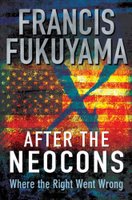
Is there any commentator more regularly misjudged and misquoted than Fukuyama? His 1992 magnum opus The End of History and the Last Man has been the launching pad for innumerable opinion pieces, most structured along the lines of "ho ho ho, silly old Fuku-san thought history was over, but hey, he was wrong!"
Do you wanna dance, under the moonlight, kiss me kiss me, all through the night, oh baby, do you wanna dance? Le Nozze de Figaro, Act IV
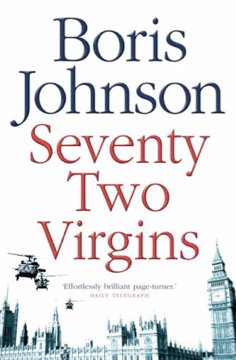
By no stretch of the imagination a good book, but an unusually interesting one for followers of contemporary British politics. 
One of several pleasing byproducts of a recent trip to NYC and Philadelphia was the discovery/digestion of Iain Pears' rather cerebral but entirely entertaining art history mystery series - six titles altogether of which The Raphael Affair is the first. Managed to pick up five of them in Barnes & Noble on 5th Ave and probably 43rd St for $6.50 each, and the last in Philadelphia, more expensive (not really a problem) but larger and bound differently and therefore, irritatingly, spoiling the arrangement on the bookshelf.


Classic whodunit, classic plot, classic setting, classic cast, classically told by a classic 85 yr old baroness, whose neurones are clearly in better shape than some other baronesses we could mention
Quite a good read actually, if you like health policy, pharmacoepidemiology, risk-benefit and so on.
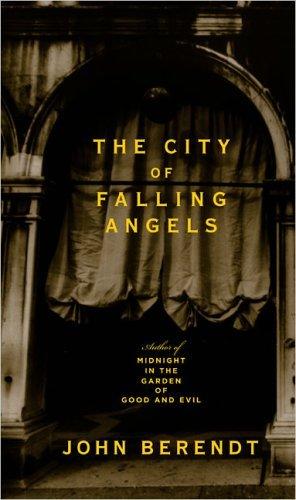
Didn’t read Berendt’s first bestseller, Midnight in the Garden of Good and Evil¸ discouraged by the unbearably pretentious title. This one was harder to resist at the Philadelphia airport bookstore last week – promising the story of the rebuilding of the Gran Teatro La Fenice after the catastrophic fire of 1996
So to the book every bleary Aussie is reading – the Latham Diaries – unlike most political memoirs, an actual bestseller, more than 13,000 copies gone in the first week – second only to the CSIRO Total Wellbeing Diet (19,800 copies) and way ahead of the 2006 Guinness Book of World Records (7,800).


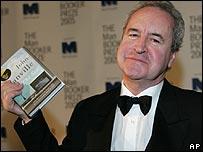
The winner of the Man Booker prize for 2005 will be announced in about 45 minutes time at a glittering ceremony at the Guildhall in London - it will be around 10pm local time. BBC2 is providing live national television coverage. Will Good Morning Australia be crossing over to cover it? Perhaps not.
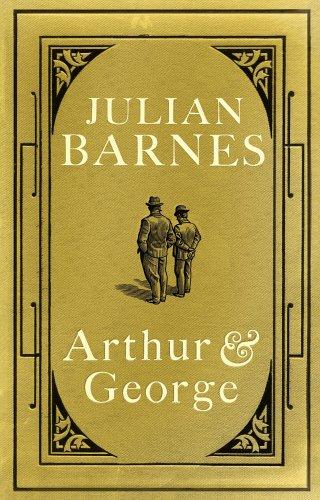
At any rate, this green cloth-covered eccentricity by Julian Barnes is the bookies favorite to win. But while it is hard not to include Flaubert's Parrot (1985) in any list of all time greats, Barnes has been spiralling downwards ever since and this workmanlike, enjoyable tale doesn't really reverse the trend.
Actually it's rather reminiscent of David Lodge's recent retelling of the last years of Henry James' life, and his unfortunate foray into the theatre - Author! Author! (2004)- which had the same oddly disengaged authorial stance. As in, hmm, time to write another book, don't care about much anymore, how about a historical reconstruction?
Or is to say that to naively miss the allegorical dimension, the commentary on injustice and race in contemporary Britain? Don't think so, sorry, no.


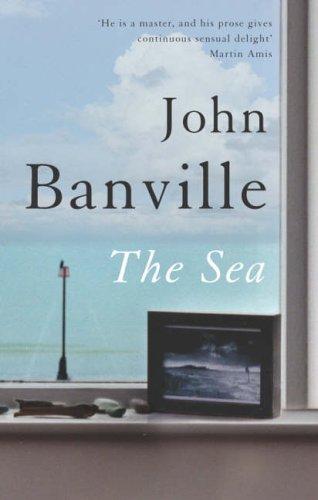
Went down to Dymocks at Worldy to pick up reserved copies of Julian Barnes’ Arthur and George and John Banville’s The Sea as part of a vaguely highbrow plan to read through the Booker shortlist. And Michelle behind the counter said, ‘Wanna freebee?’ and tossed Rubdown by Leigh Redhead in the bag as well. Started it with low expectations, but what a pageturner… funny, sharp, zippy/unzippy and quite rude in spots. Great sense of place (er,